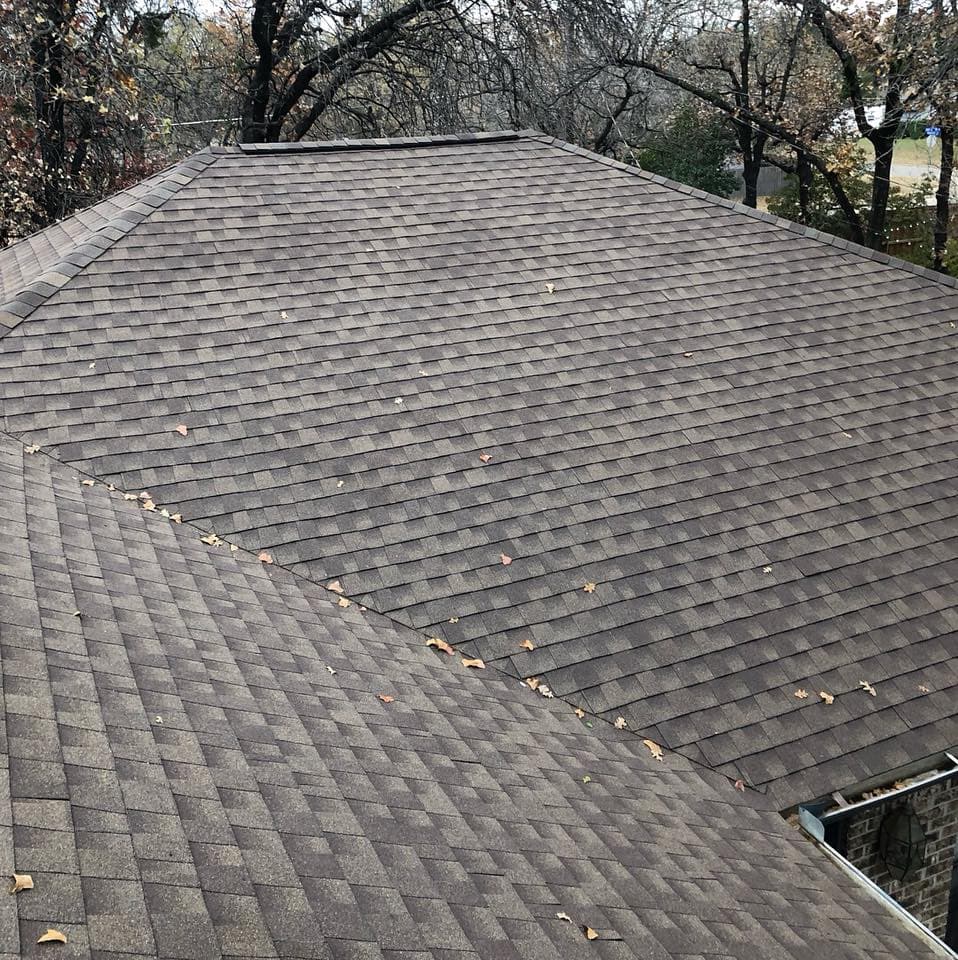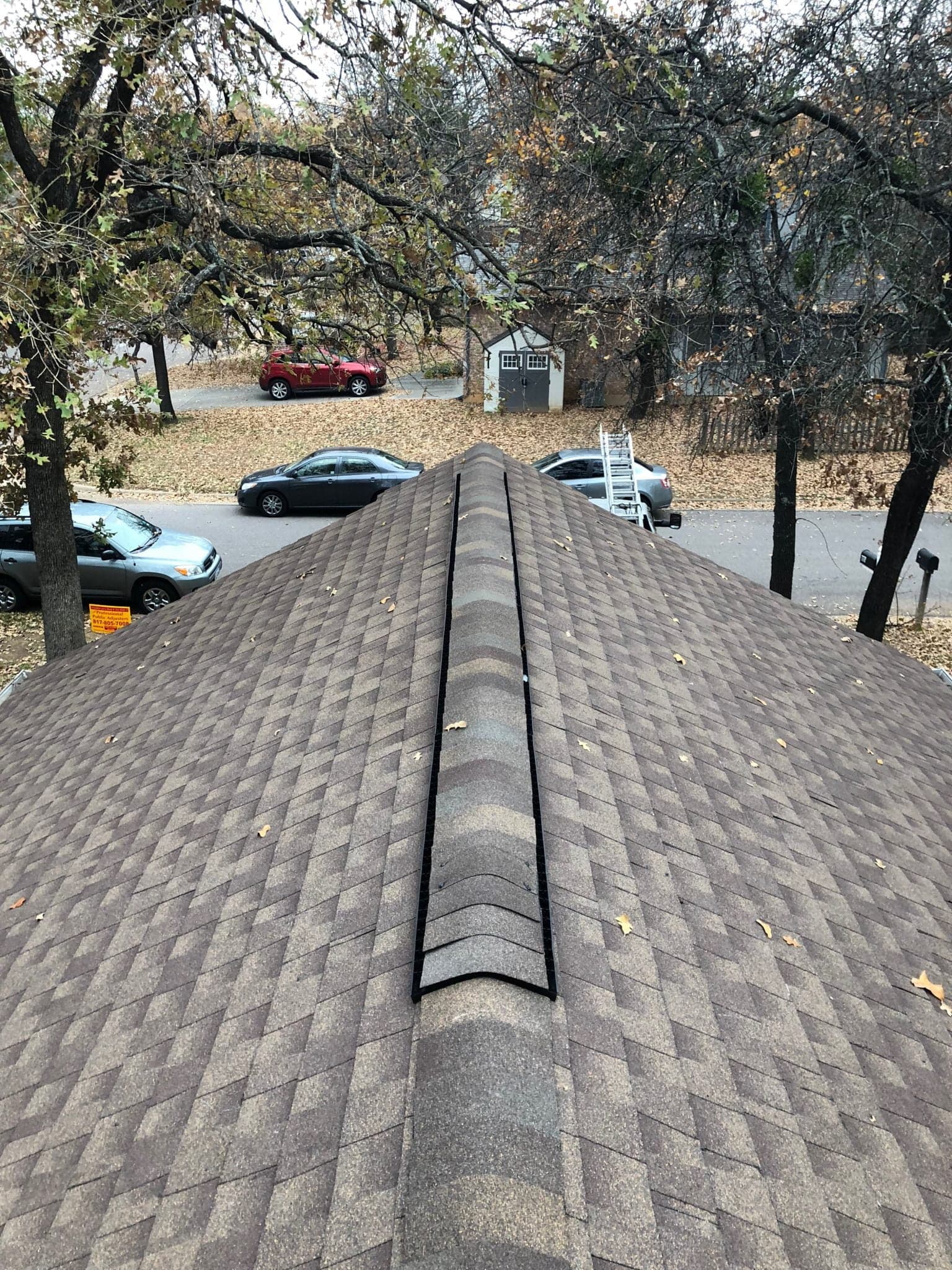
Hurst sits in the middle of the Mid-Cities, between Fort Worth and the airport, and shares its character with Euless and Bedford next door. Established neighbourhoods, mature trees, and a lot of roofs that went on in the same two decades.
Hurst at a glance
Tarrant County, Texas
- Housing stock
- Mainly 1960s through 1980s suburban development — single and two-storey homes on established lots with mature tree cover.
- Hail exposure
- Regular. The Mid-Cities corridor takes storm systems moving east across Tarrant County most spring seasons.
- Local factor
- Mature trees mean more debris in gutters and valleys, and more limb impact during storms, than in newer developments.
Neighbourhoods we work in
Central Hurst · Bellaire · Redbud · North East Mall area · Hurst Hills
An established suburb with established trees
Hurst grew mainly between the 1960s and 1980s, and it grew with trees. Four or five decades on, that canopy is mature — which is much of what makes these neighbourhoods pleasant and is also the main thing complicating their roofs.
Debris in valleys. Leaf litter collects where two roof planes meet and holds moisture against the shingle. Over years that accelerates deterioration in precisely the area least able to tolerate it, because valleys carry the most water on the roof.
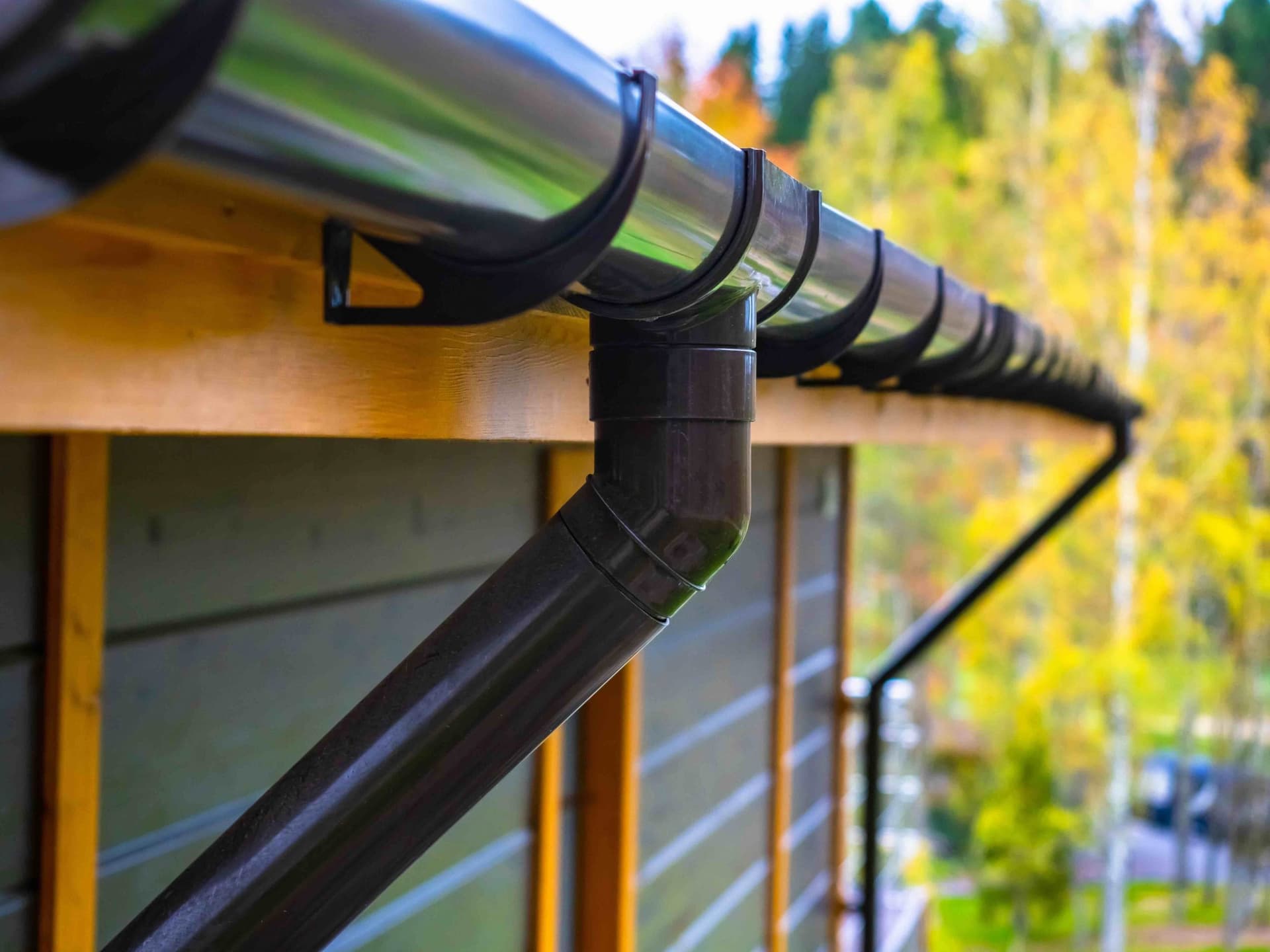
Blocked gutters. The same debris fills the gutters. Once they overflow, water runs back under the roof edge into the decking and down the fascia. This is the single most common cause of the slow, undramatic leak we get called out to in Hurst.
Limb impact. Storms bring branches down. A limb strike punctures shingles and can crack the decking beneath, and the damage is often not obvious from ground level.
None of this argues for removing the trees. It argues for clearing gutters and having the roof looked at once a year.
Roofs that aged together
Because the housing went up across a fairly narrow window, Hurst roofs tend to reach end of life in clusters. Most homes here are on their second covering and a good number are due a third.
Age on its own is not a reason to replace anything. But it is a reason to know where you stand, particularly before hail season rather than after it — a documented pre-storm condition makes any subsequent claim considerably more straightforward.
The Mid-Cities hail pattern
Hurst, Euless and Bedford sit in the corridor that spring storms cross on their way east. The damage is rarely dramatic: granule loss on the exposed slopes, seal strips broken along the ridges, dents in vents and gutter aprons.
It is invisible from your driveway and it is the reason a great deal of Mid-Cities hail damage never gets claimed. If a storm has been through, book a free inspection while the damage is fresh and reportable.