Exterior paint in North Texas is doing more than making the house look presentable — it is the layer stopping UV and moisture reaching the material underneath. Our sun is unforgiving, and the difference between a paint job that lasts three years and one that lasts ten is almost entirely in the preparation.
Preparation is most of the job
Wash, scrape, sand, repair, prime. Paint over a poor surface fails regardless of what it cost.
Products rated for this sun
UV-stable exterior coatings, not whatever was on offer.
Repairs before coating
Rotten trim and failed caulking get fixed first, not painted over.
Why paint fails early here
UV degradation. Sustained direct sun breaks down the binder in the coating. The surface chalks — that powdery residue on your hand when you touch a south wall — and the colour goes flat.
Thermal cycling. Big day-to-night temperature swings expand and contract the substrate underneath. The coating has to flex with it, and brittle or over-thinned paint cracks instead.
Moisture from behind. If water is getting into the wall through failed siding, bad flashing or an overflowing gutter, it pushes out through the paint film and lifts it. No coating survives that, and repainting without fixing the source is money spent twice.
Poor preparation. The most common cause by a wide margin. Paint applied over chalk, dirt or flaking material bonds to a layer that is already letting go.
What proper preparation involves
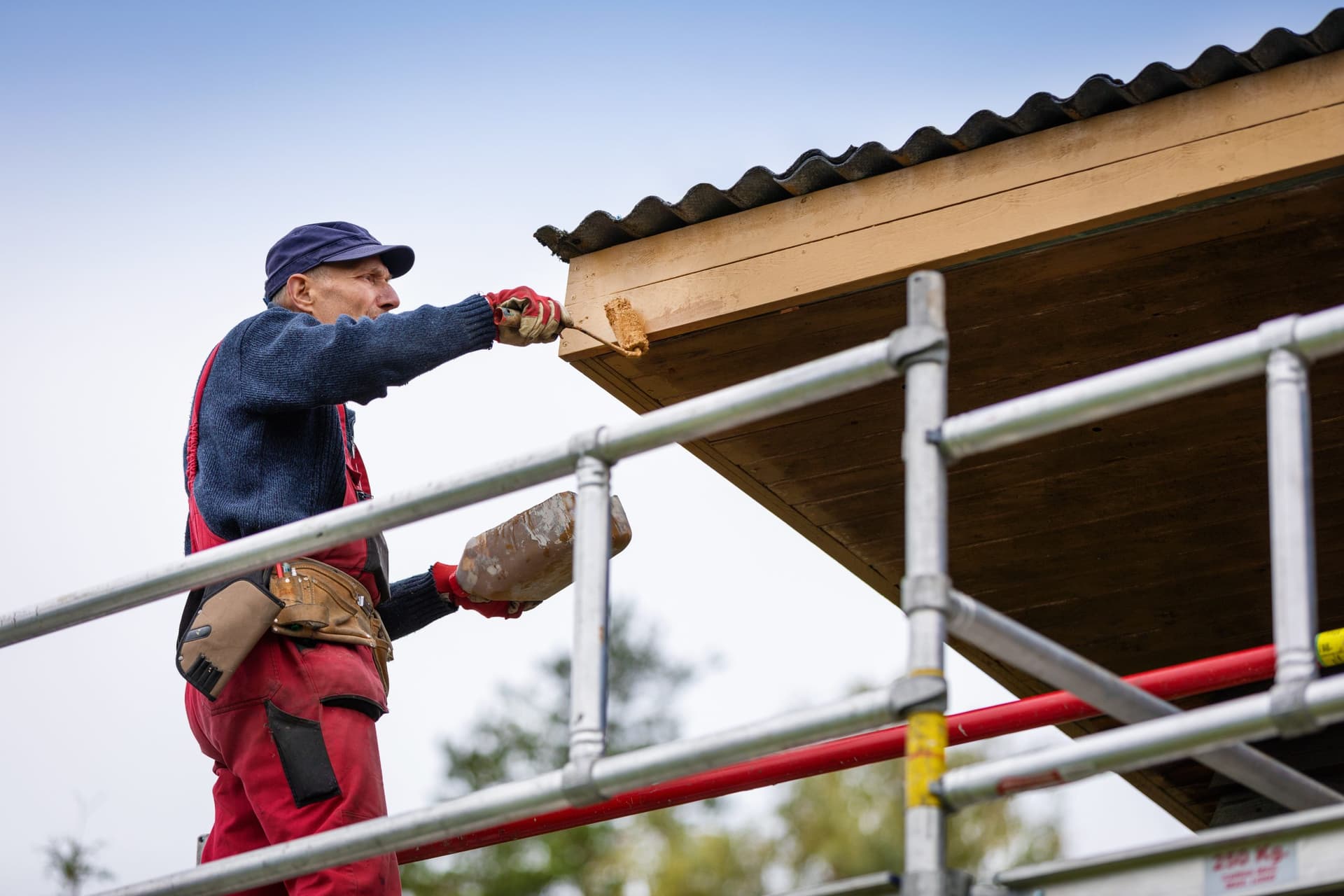
Washing the whole surface to remove chalking, dirt, mildew and pollen. Scraping and sanding every area of failed coating back to sound material, then feathering the edges so repairs do not telegraph through the finish.
Repairing damaged timber — trim, fascia, siding — rather than coating over it. Re-caulking joints, seams and penetrations, because old caulking shrinks and cracks and is a direct water path. Priming bare and repaired areas so the topcoat has a consistent surface to bond to.
Only then does the paint go on: two coats, at the spread rate the manufacturer specifies rather than stretched to save a tin.
Choosing colours that survive
Colour choice here is partly practical. Very dark colours absorb significantly more heat, which increases thermal movement and shortens the life of the coating on sun-facing elevations. Very saturated reds and blues use pigments that fade faster under this much UV.
That is not an argument for beige — it is a reason to think about which elevations get the strongest colour. We will show you samples on your actual walls, in daylight, at different times of day, because a colour chosen under showroom lighting rarely looks the same on the house.
See also: pick the perfect exterior paint colour and best ways to enhance your home's curb appeal.
Painting alongside other work
If you are already having siding or gutters replaced, painting afterwards is the sensible sequence — repairs are done, the surface is consistent, and access equipment is on site. Doing it as one project rather than three costs less and produces a better result.
How a exterior painting job runs
Survey and colour
Surface condition assessed, repairs identified, colours viewed on your actual elevations.
Protection and washing
Landscaping, windows and fixtures masked. Full surface wash to remove chalking and dirt.
Scrape, sand and repair
Failed paint removed, surfaces feathered, damaged timber and trim repaired, gaps re-caulked.
Priming
Bare and repaired areas spot-primed, or a full prime coat where the substrate needs it.
Topcoats
Two coats applied to manufacturer spread rate. Trim and accents cut in by hand.
Clean and walkthrough
Site cleared, masking removed, and we walk the whole exterior with you.