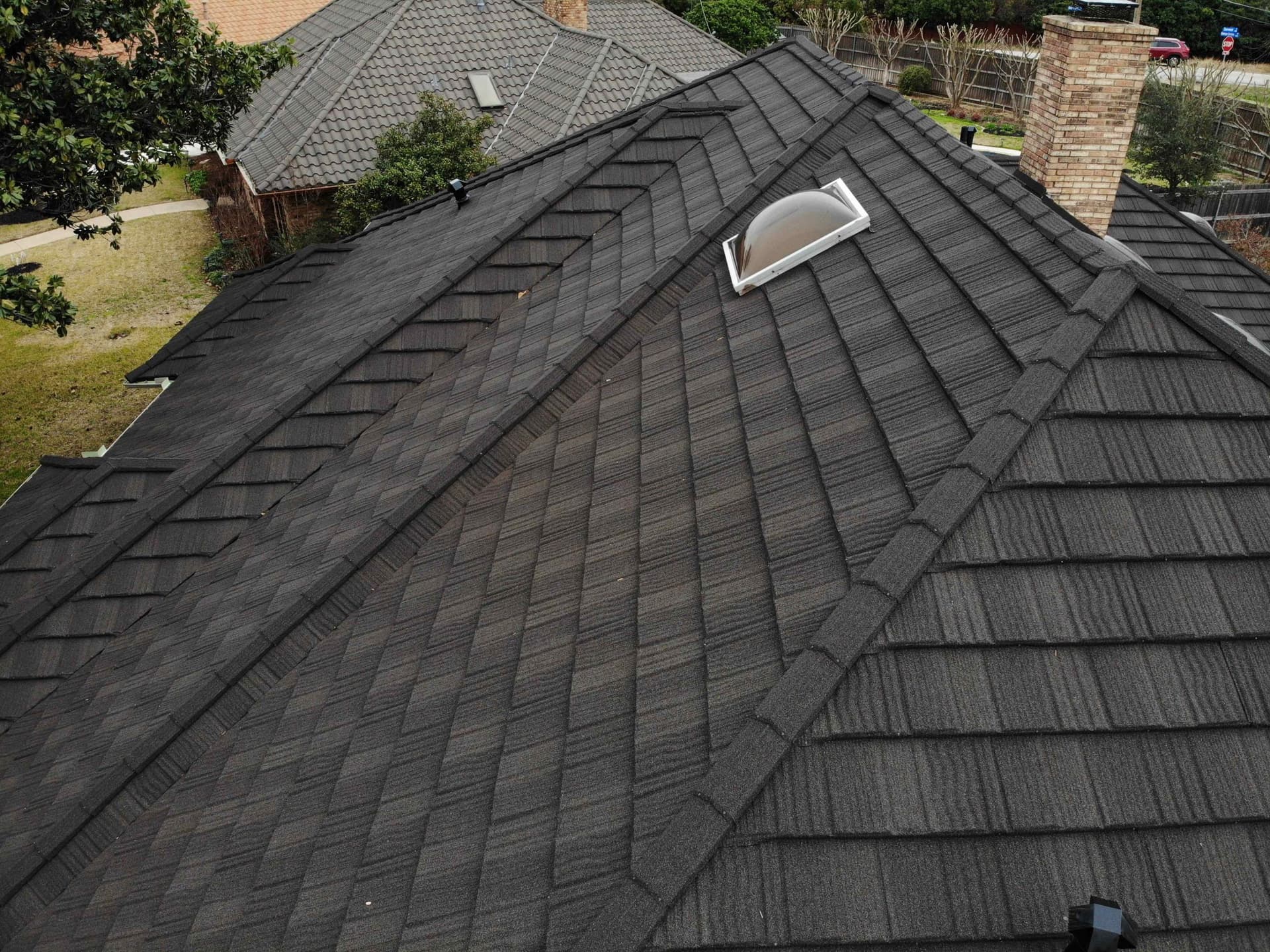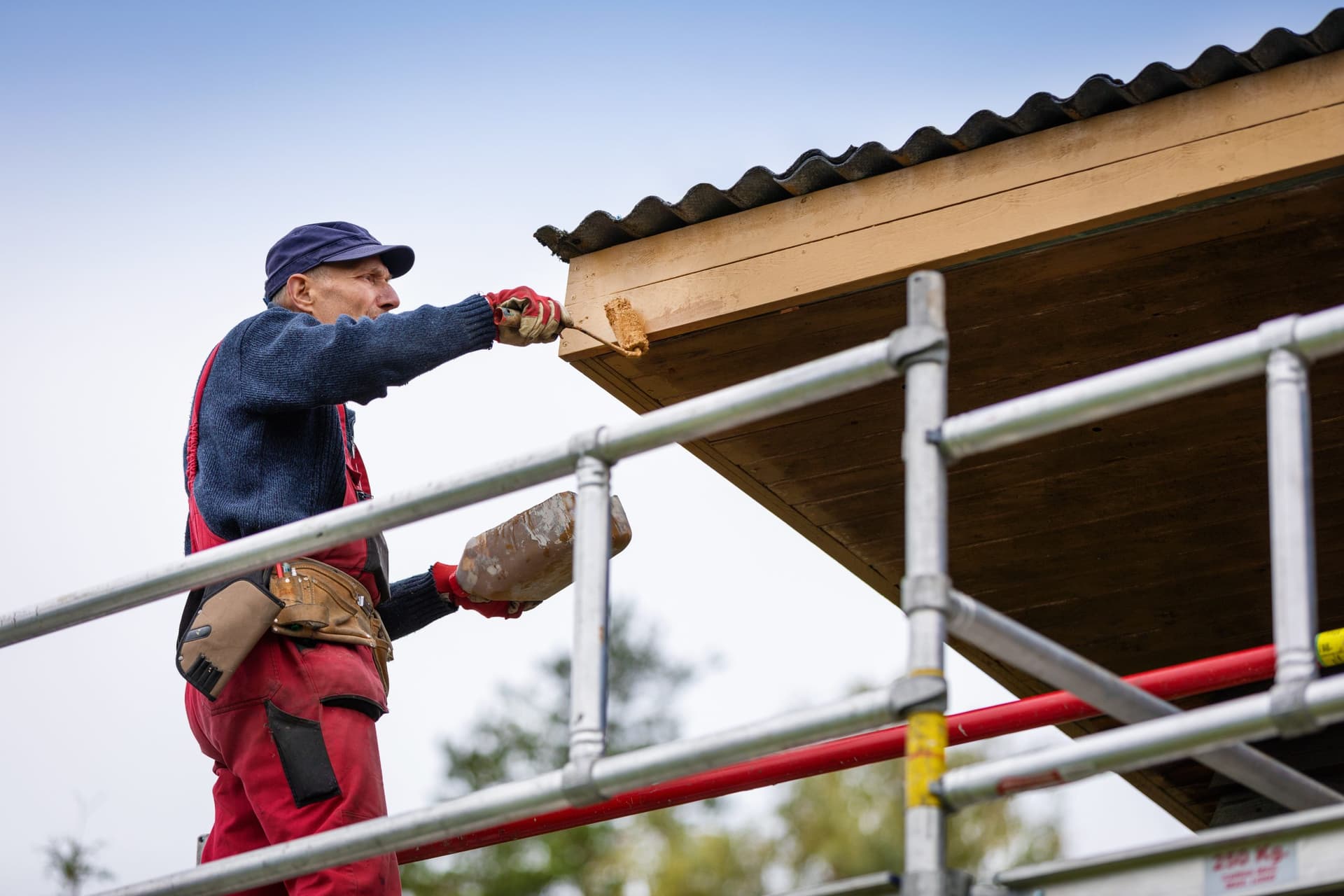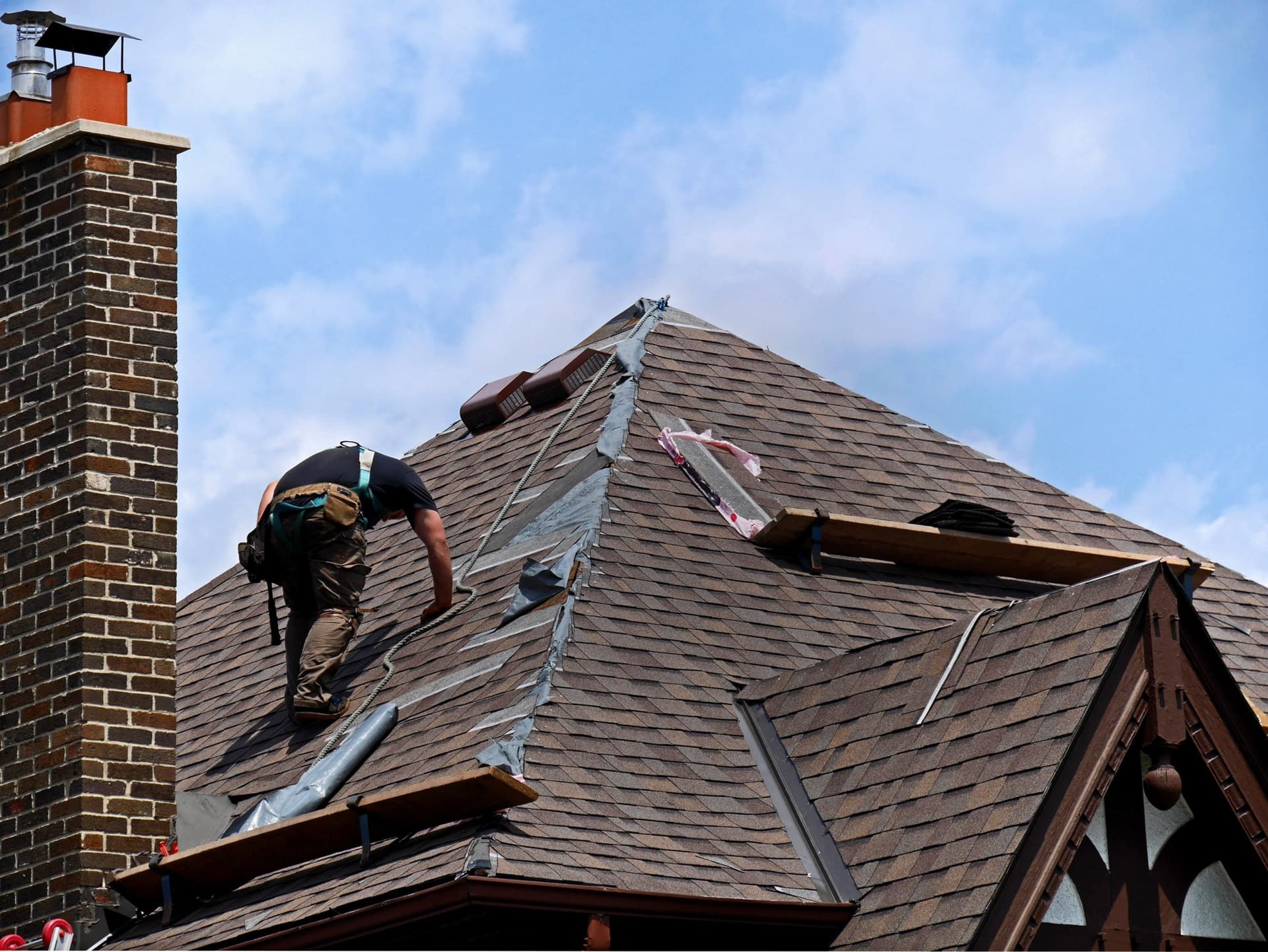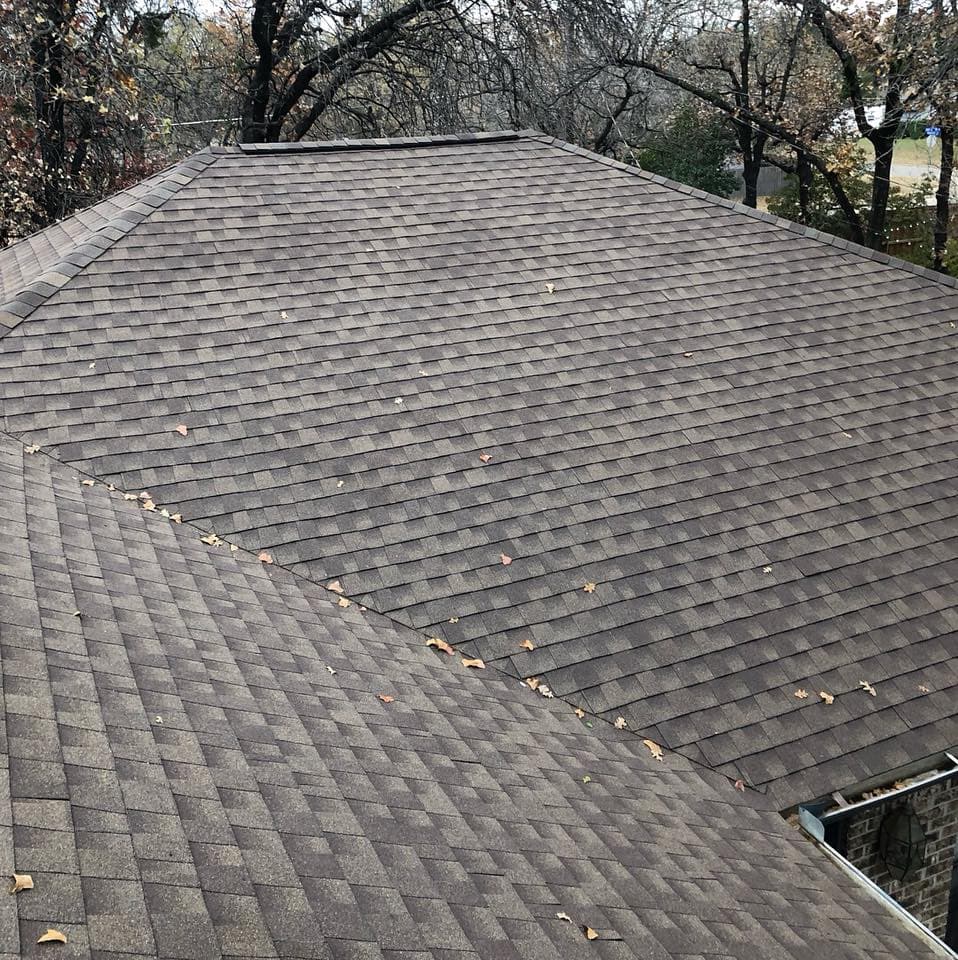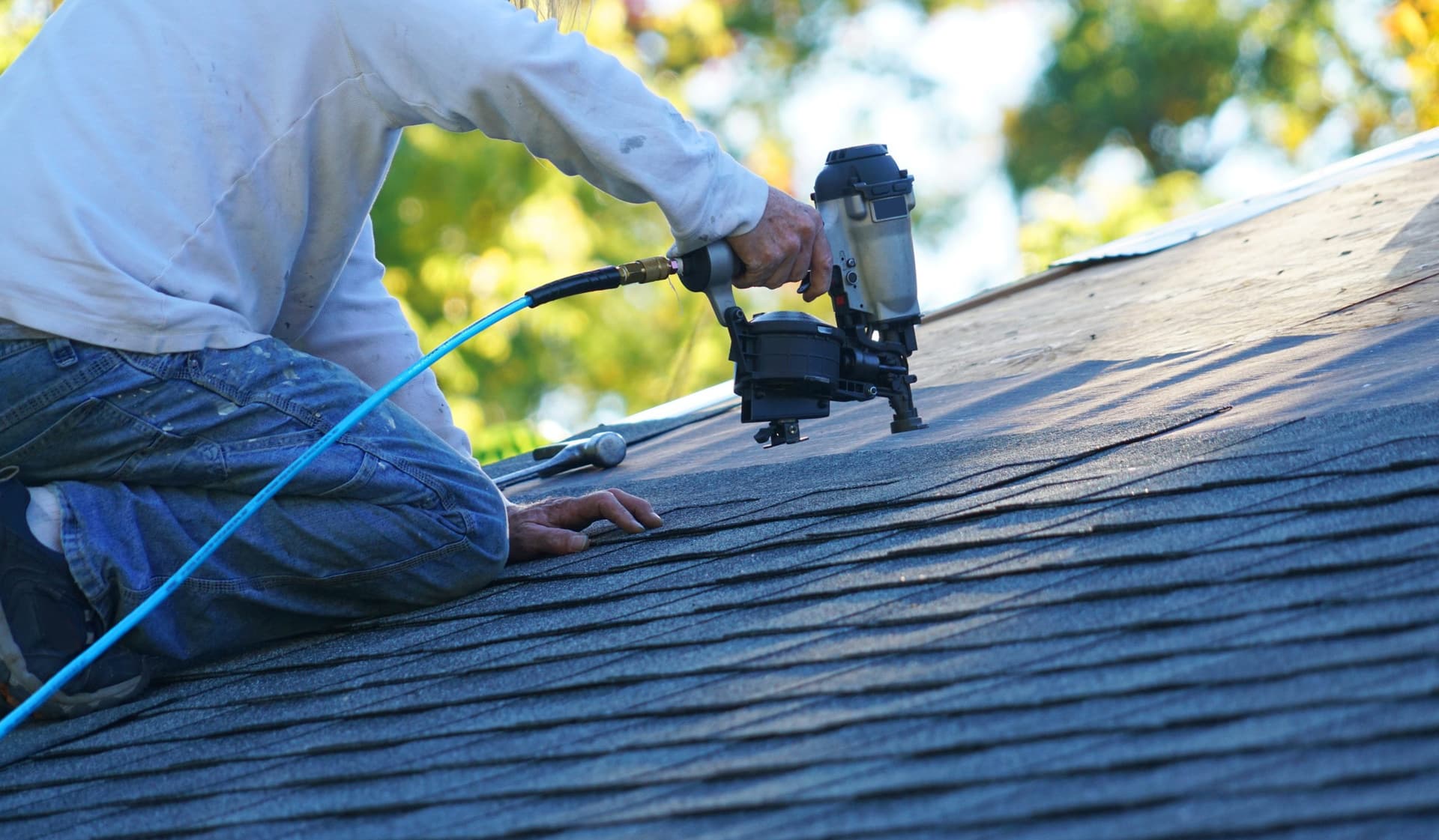
Most roof problems in North Texas start small and stay hidden. A few lifted shingles after a spring storm, a cracked pipe boot, flashing that has pulled away from a chimney — none of it looks urgent from the ground, and all of it lets water in. We find the actual source, fix it properly, and show you what we found.
We find the real source
A stain on your ceiling is rarely directly below the leak. We trace it back rather than patching the symptom.
Repair before replace
If your roof has years left, we will tell you. We quote replacements when they are warranted, not by default.
Documented for insurance
Every inspection is photographed. If the damage is claimable, you have the evidence ready.
Common roof problems we repair in North Texas
Missing or lifted shingles. Straight-line winds get under the edge of a shingle and break the seal. The shingle may still be there, but it is no longer watertight.
Hail bruising. Hail knocks the protective granules off the shingle surface. The mat underneath then degrades in the sun. This is the damage homeowners most often miss, because from the ground the roof looks fine.
Failed pipe boots. The rubber collar around a plumbing vent typically fails years before the shingles do. It is one of the most common sources of an interior leak and one of the cheapest to fix.
Flashing separation. Where the roof meets a chimney, wall or skylight, metal flashing does the sealing. Once it lifts or corrodes, water runs straight into the structure.
Deck rot from a slow leak. Water that has been getting in for a season or two softens the plywood beneath. Shingles laid over rotten decking will not hold, so this has to be addressed first.
Why prompt repairs matter here
North Texas puts roofs through an unusual amount of work: hail in spring, sustained heat through summer, and the occasional hard freeze. A minor defect that would sit harmlessly for years in a milder climate gets found out quickly here.
Delaying a small repair typically means dealing with three problems instead of one — the original defect, the water damage it caused, and the mould or rot that followed. Catching it early also matters for insurance: most policies expect damage to be reported promptly, and a claim is easier to support when the damage is fresh and documented.
What a repair looks like
Small repairs are usually finished in a day. We work off photographs taken during the inspection so you know exactly what is being done and why, and we match materials to what is already on your roof wherever possible.
If the inspection turns up damage that is likely covered by your policy, we will say so and help you through the insurance claim. If the roof is genuinely past repair, we will explain why and what a full replacement would involve — but we are not going to sell you one you do not need.
Storm damage is a different job
If your roof was hit in a named storm or a hail event, the repair itself is usually the simpler half of the problem. Documenting the damage properly for your insurer is where most homeowners lose money. That work is covered on our storm damage page.
How a roof repairs job runs
Free inspection
We walk the roof, check the attic where accessible, and photograph everything — no charge and no obligation.
Findings in writing
You get the photos, what is wrong, what is causing it, and what happens if it waits.
Clear estimate
Line-itemed, with materials named. If insurance is involved we help you file.
Repair
Most repairs are a single day. We protect landscaping, magnet-sweep for nails, and leave the site clean.
Final walkthrough
We show you the finished work and how it ties into the rest of the roof.