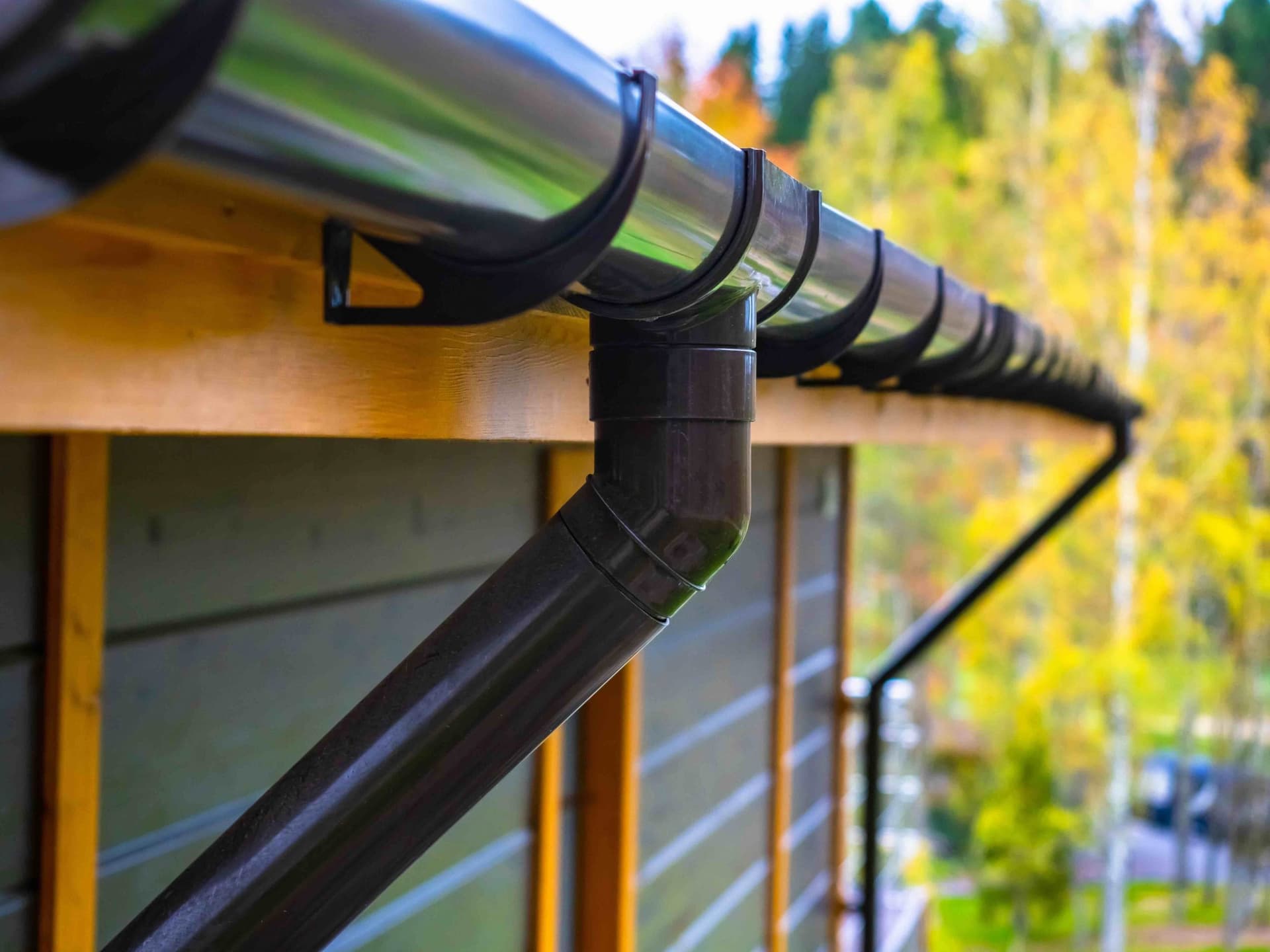
Gutters are the least glamorous part of a roof and one of the most consequential. Their job is to move water away from your foundation. When they fail, the damage rarely shows up on the roof — it shows up in the fascia, the siding, the landscaping and, expensively, the slab.
Seamless, formed on site
Cut to your exact runs, so the only joins are at corners and outlets — far fewer places to leak.
Sized to the roof
Gutter and downspout capacity matched to your roof area and pitch, not fitted to a default.
Fitted with the roof
Cheapest and cleanest to do during a roof replacement, while access is already on site.
What failing gutters cost you
Foundation movement. This is the expensive one. North Texas clay soil expands and contracts with moisture, and water discharged repeatedly at the base of a wall drives that cycle. Slab repair is an order of magnitude more expensive than gutters.
Fascia and soffit rot. Water overtopping a blocked gutter runs down the fascia behind it. By the time the paint is peeling, the timber underneath is usually already going.
Siding and paint damage. Constant saturation on one section of wall degrades siding and strips exterior paint years early.
Roof edge damage. Blocked gutters back water up under the shingle edge, which is a common and entirely preventable source of decking rot.
Landscape erosion. Concentrated discharge scours beds and undermines paths.
Common problems we fix
Sagging runs where hangers have pulled out of soft fascia. Incorrect fall, so water sits in the gutter instead of moving to the outlet. Undersized downspouts that cannot take what the roof delivers in a heavy Texas downpour. Separated seams on older sectional systems. Discharge points too close to the house. Blockages — the most common of all, and the cheapest to prevent.
Materials
Aluminium is what we fit most: rust-proof, light, formed seamlessly on site, and available in a wide colour range to match trim.
Steel is stronger and worth considering where branches routinely come down, at higher cost and weight.
Copper is a premium architectural choice for period properties, and it weathers to a patina rather than degrading.
Sizing actually matters
A standard five-inch gutter is fine for many homes and inadequate for others. A large roof area, a steep pitch, or long runs with few outlets can deliver more water in a hard rain than the gutter can carry — at which point it overtops regardless of how new or clean it is.
We size the system to the roof rather than fitting the default, and we position downspouts to discharge well clear of the foundation. If your existing gutters overflow in heavy rain even when they are clear, undersizing is almost certainly why.
Related reading: how gutters protect your roof from water damage and leaks and five common gutter problems we fix in North Texas.
How a gutters job runs
Assessment
Existing runs, pitch, outlet positions, fascia condition and where water is actually going.
Sizing and layout
Capacity calculated from roof area and slope; downspouts positioned to discharge clear of the foundation.
On-site forming
Seamless runs rolled to length at your property.
Installation
Hung to correct fall, secured to sound fascia, sealed at corners and outlets.
Water test
We run water through the system and confirm it drains where it should.