Dallas has some of the most architecturally interesting residential roofs in North Texas — and some of the most demanding. Tudor rooflines in Lakewood, steep slate-look pitches in Kessler Park, and the complex multi-plane roofs of Preston Hollow are not jobs for a crew that only knows simple gables.
Dallas at a glance
Dallas County, Texas
- Housing stock
- Deep and varied. 1920s–40s Tudor and craftsman in the M Streets and Lakewood, mid-century in Lake Highlands, and substantial custom homes in Preston Hollow.
- Hail exposure
- Dallas County takes regular spring hail. Older neighbourhoods with mature tree cover also see more impact damage from falling limbs.
- Local factor
- Historic and conservation districts carry design constraints. Material and colour need checking before work, not after.
Neighbourhoods we work in
Lakewood · M Streets · Preston Hollow · Kessler Park · Lake Highlands · Bishop Arts
Dallas rooflines are not standard
A simple gable roof is a straightforward job almost anywhere. Much of Dallas's most desirable housing stock is not that.
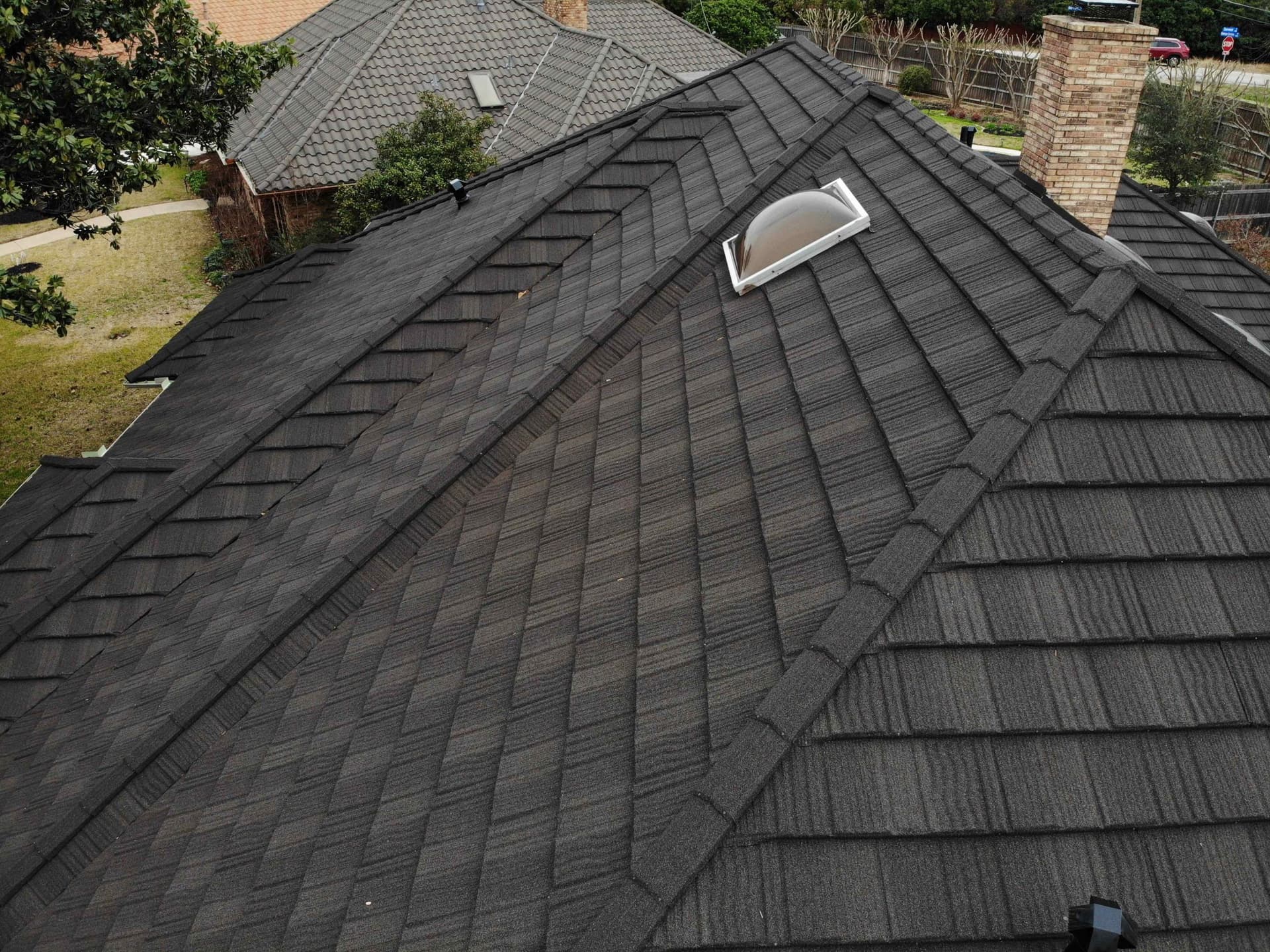
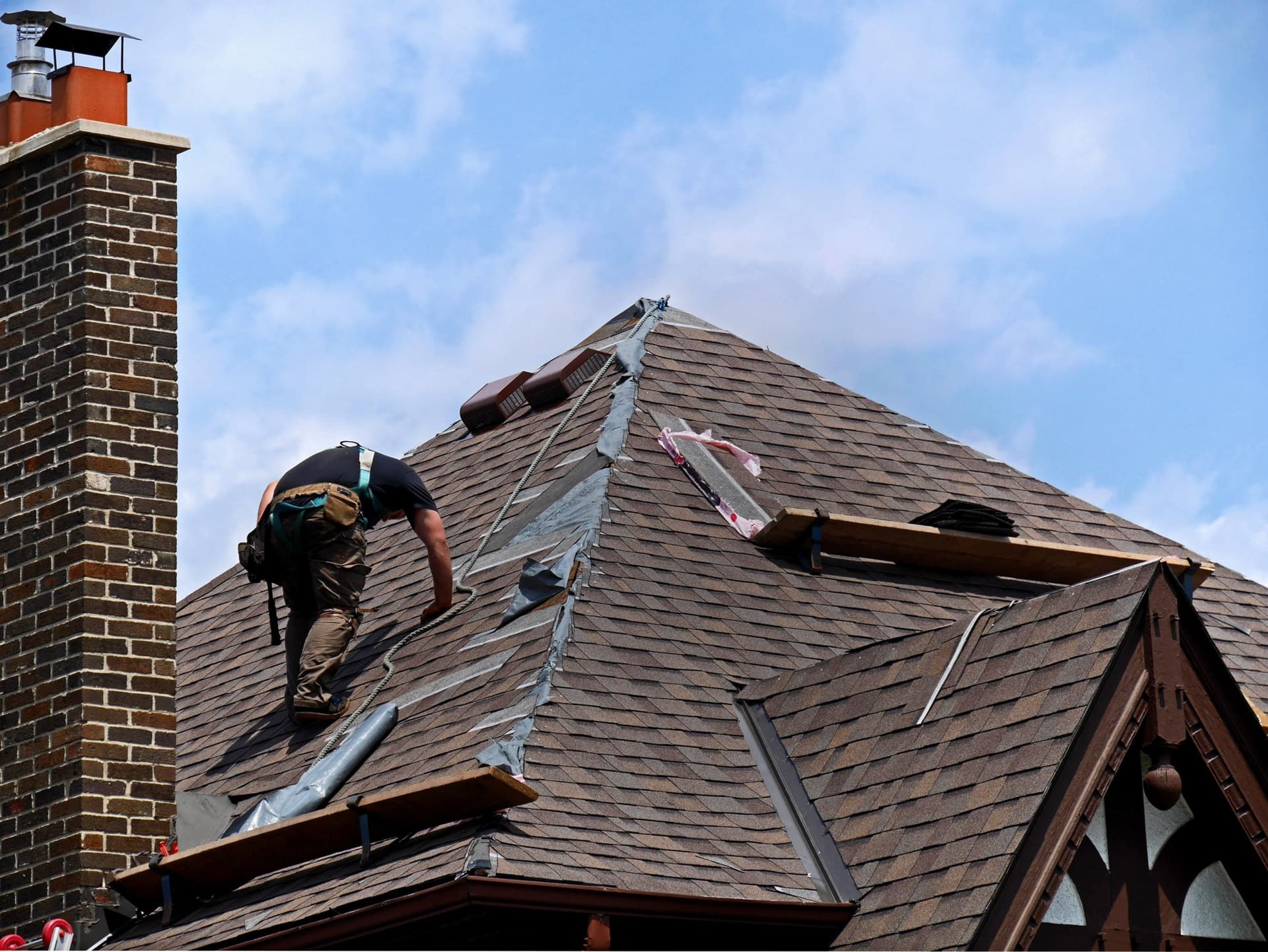
Tudor-revival homes through Lakewood and the M Streets have steep pitches, multiple intersecting planes, dormers and prominent chimneys — meaning a great many valleys and a great deal of flashing. Valleys and flashing are where roofs leak. On these houses the shingle choice is close to the least important decision; the flashing detail is the job.
Preston Hollow's larger properties bring their own complexity: extensive roof area, multiple elevations at different heights, and frequently a mix of steep and low-slope sections on the same building that need genuinely different systems where they meet.
Mid-century Lake Highlands is more conventional, with shallower pitches and simpler layouts — but shallow pitch is less forgiving of wind-driven rain, so underlayment specification matters more than people assume.
Historic and conservation districts
Several Dallas neighbourhoods sit inside conservation or historic districts where exterior changes, including roof material and colour, can be subject to review.
This is very much easier to establish before the tear-off than after. We check what applies to your property during the estimate and prepare whatever documentation is needed, so approval is not the thing holding your job up in August.
After a tornado warning
Dallas sits on the eastern edge of the spring tornado corridor, and the damage pattern after a warning is different from ordinary hail — debris impact and uplift rather than bruising. What to check, and what to photograph before anything is moved, is set out on our Dallas tornado page.
Trees, gutters and the slow leak
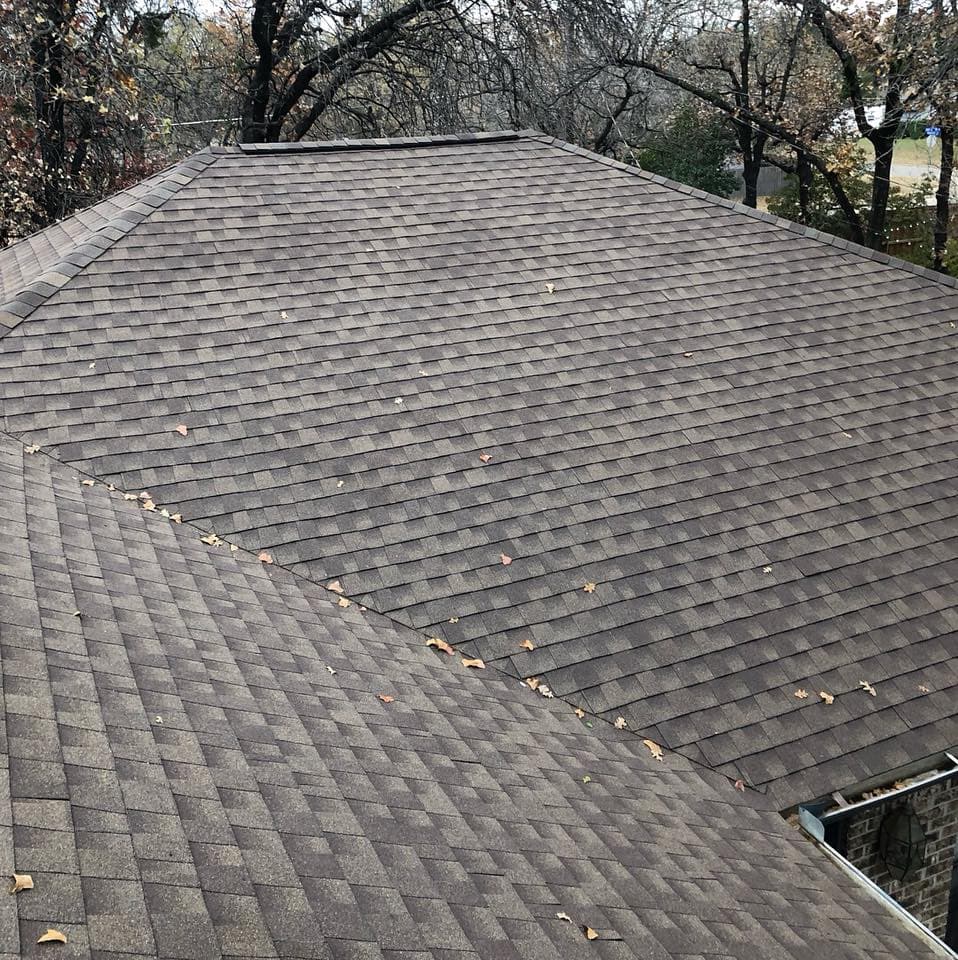
The mature tree canopy that makes East Dallas what it is also fills valleys and gutters with leaf litter every autumn. Debris in a valley holds moisture against the shingle; debris in a gutter backs water up under the roof edge and into the decking.
This is the most common cause of the slow, undramatic Dallas roof leak — not a storm, just years of blocked drainage. It is also the cheapest thing on this page to prevent.