Irving is really two roofing markets in one city. Las Colinas and Valley Ranch bring newer homes, strong HOAs and a substantial amount of low-slope commercial work; south Irving is older, more modest housing where a straightforward, honestly-priced repair is usually what people actually need.
Irving at a glance
Dallas County, Texas
- Housing stock
- Post-war and mid-century through south Irving, 1980s–90s planned development in Valley Ranch, and mixed residential and commercial across Las Colinas.
- Hail exposure
- Standard for central Dallas County — regular spring hail, with the flat open terrain around Las Colinas offering little shelter.
- Local factor
- Heavy commercial and mixed-use presence means we do considerably more low-slope and flat roofing here than in most DFW cities.
Neighbourhoods we work in
Las Colinas · Valley Ranch · South Irving · Hackberry Creek · Song neighbourhood
Two very different jobs in one city
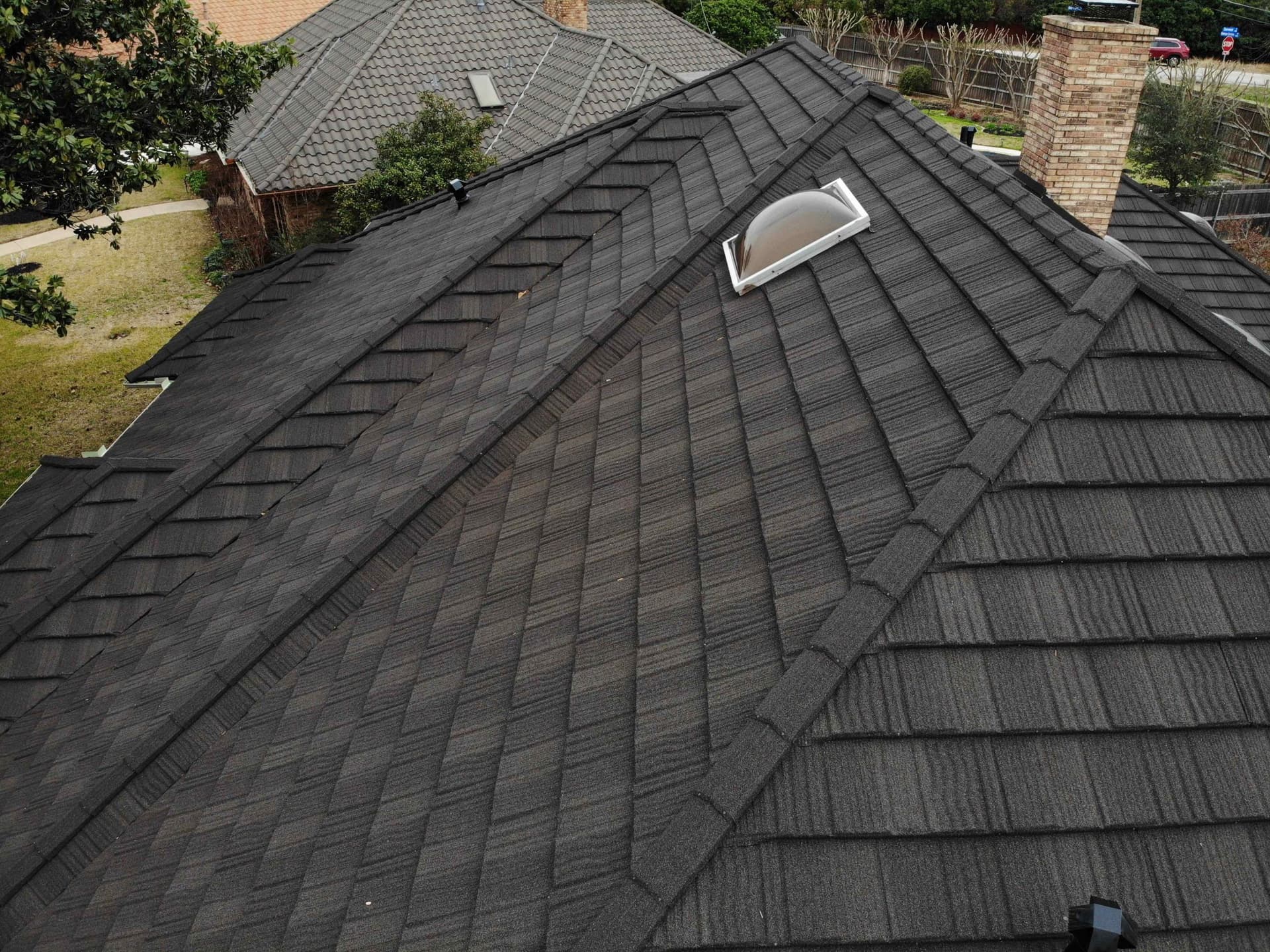
South Irving is largely post-war and mid-century housing — smaller footprints, simple gable and hip roofs, and a lot of homes on their second or third covering. The work here is mostly straightforward repair and replacement, and what homeowners generally want is a contractor who will say plainly whether the roof needs replacing or has another five years in it. Often it has another five years.
Las Colinas and Valley Ranch are a different proposition. Newer housing, larger and more complex roofs, active HOAs with architectural standards, and a considerable volume of commercial and mixed-use property with low-slope roofs that need an entirely separate skill set.
We do both, and we do not pretend they are the same job.
Low-slope work around Las Colinas
The commercial density around Las Colinas means we spend more time on flat and low-slope roofs in Irving than in most of the cities we serve.
Those roofs fail differently from residential ones. Not in dramatic events but at seams, at flashings around HVAC curbs and parapets, and at drains that block and leave water standing. Ponding is the single most destructive condition on a flat roof, and it is nearly always a drainage problem rather than a membrane problem.
Our commercial roofing page covers the systems and the maintenance programmes that keep those roofs out of capital replacement for as long as possible.
Flat terrain, full exposure
Much of Irving is open and level, with limited mature tree cover in the newer developments. That has one advantage — less limb impact and less debris in gutters — and one disadvantage: nothing takes the edge off wind-driven rain or hail before it reaches your roof.
On exposed sites, wind rating on the shingle matters and correct edge detailing matters even more. Most wind damage begins at an edge or a ridge, and works inwards from there.